

Solar for Northern Ireland farms
Agricultural Solar Panels in Northern Ireland: Solar for Farms, Sheds and Rural Businesses
Why farms are a natural fit for solar
A house uses most of its electricity in the evening. A farm uses it in the day. Milking parlours run morning and afternoon, bulk tanks and coolers cycle continuously, poultry sheds ventilate hardest in warm daylight hours, and grain dryers work flat out in late summer. That daytime profile means a farm can use far more of its own solar generation than a home can, without depending on a large battery to shift it. Add the roof space of a modern shed, a yard with room for a ground array, and in many cases a three-phase supply, and agricultural sites are among the best places in Northern Ireland to put solar. Blue Sky Energy installs solar panels Northern Ireland-wide as an MCS-certified installer, and farm systems are a growing part of our commercial solar work.
Why solar works on a farm
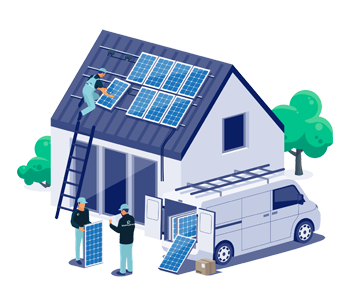
Daytime loads, daytime power
Shed roofs and yards
Three-phase ready
Matching solar to farm loads
The first thing we look at on a farm is when the electricity is used, not just how much. Every unit you use yourself is worth far more than a unit exported, so the best systems are sized for generation to be consumed on site as it is produced.
- Dairy: milking, vacuum pumps, plate coolers, bulk tank refrigeration and water heating, with morning and afternoon peaks and a steady cooling load between.
- Poultry: ventilation fans, lighting, feed lines and heating. Ventilation demand rises with daytime temperature and tracks solar output closely.
- Arable: grain drying and cold storage concentrated in harvest months, plus workshop and yard loads year round.
- Equestrian: yard lighting, water heating, horse walkers and arena lighting, often with a house and livery business on the same supply.
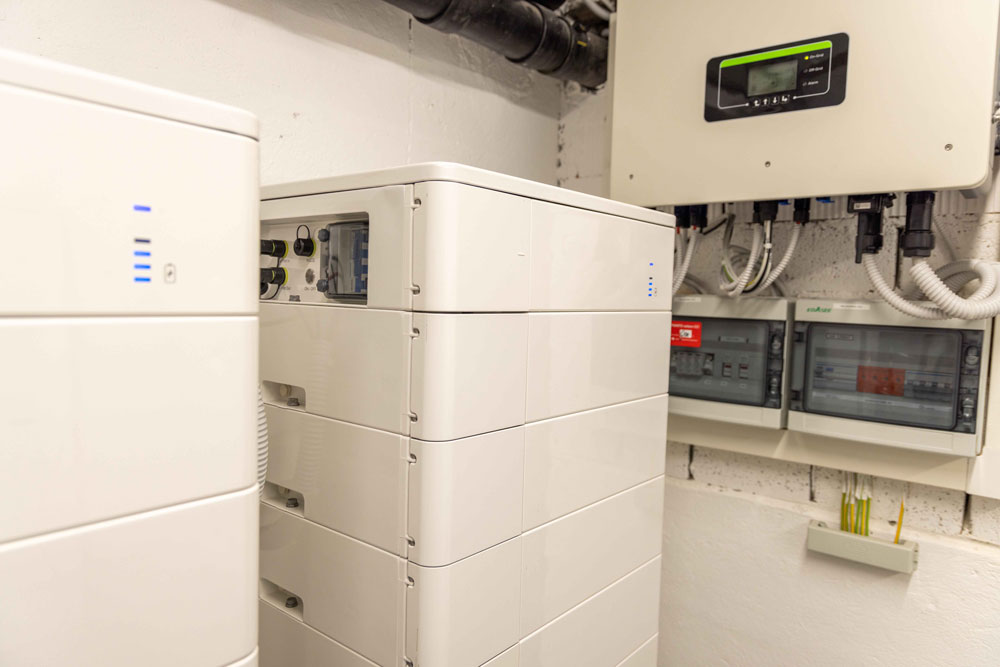
Where a farm has overnight loads, such as a bulk tank cycling through the night, a battery can still make sense, and we size it around the actual profile.
Shed roofs or a ground-mounted array?
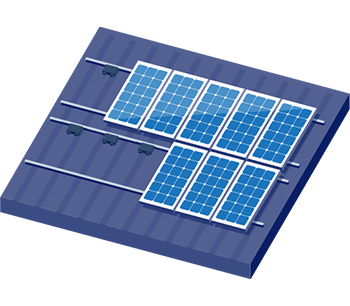
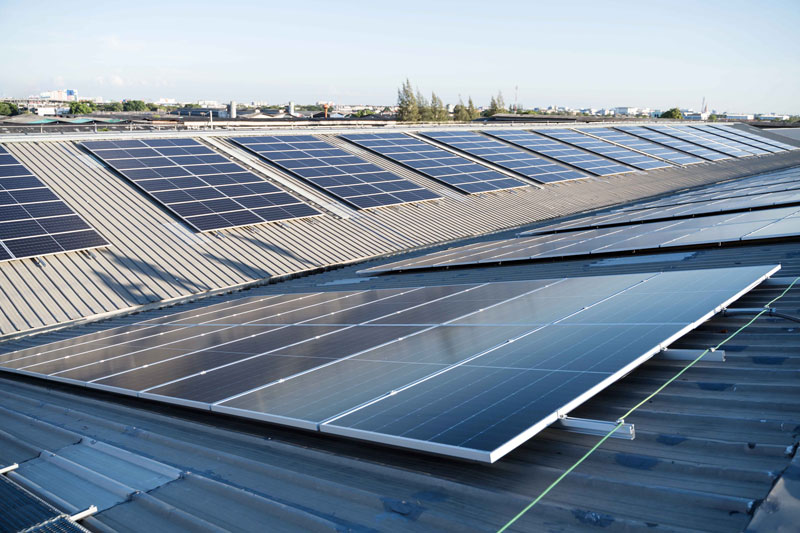
Most farm systems go on shed roofs. A steel portal-frame shed with a south, east or west facing pitch, no shading and sound roof sheeting is close to ideal, and the panels sit out of the way of yard traffic. We check the structure, the sheet condition and the fixings before committing to a layout, because a roof that needs replacing in five years is not the place for a long-term asset.
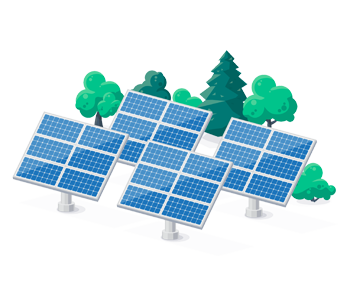
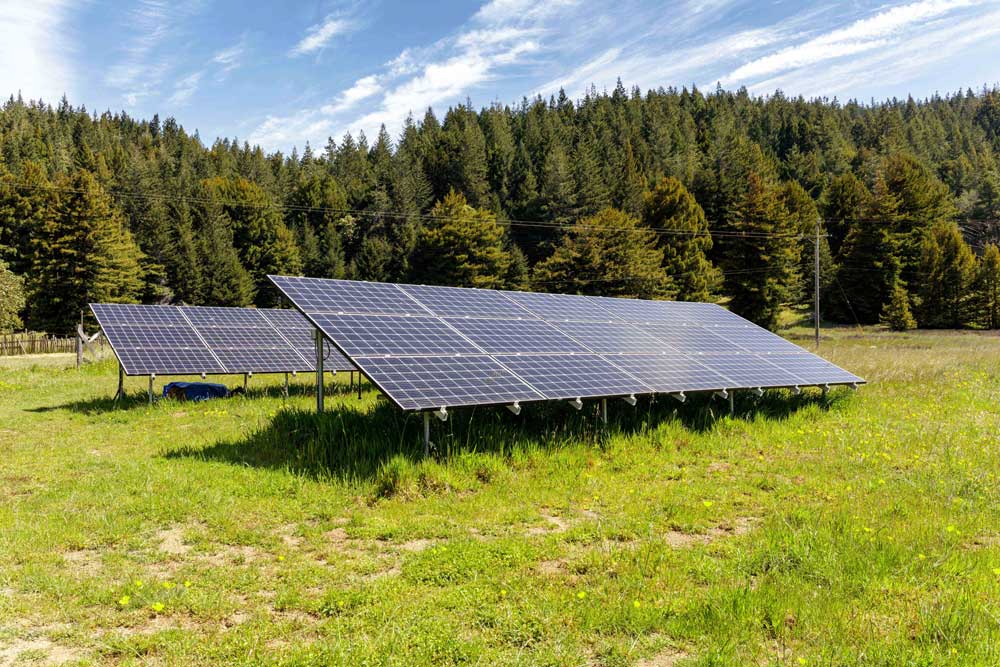
Ground-mounted arrays suit farms with land near the buildings but roofs that are shaded, north-facing, asbestos-clad or structurally light. They are easier to clean and inspect and can be sized without the constraint of a roof. The trade-off is planning: roof-mounted panels on a non-domestic building are permitted development within set conditions, but a farm-scale ground array normally needs a planning application. We assess your site before any work starts and handle the application if one is needed; the rules are in our planning permission guide.
Three-phase supplies and larger systems
Many farms already have three-phase for milking equipment, dryers or fans, and that changes what solar can do. NIE Networks' simplest route, G98/NI, covers up to 16 amps per phase, which is 3.68kW on single phase but 11.04kW on three-phase, on a fit-and-inform basis. Above that, systems go through G99/NI, applied for before installation. Since 1 May 2026 the G99/NI Fast Track route covers capacity up to 60 amps per phase with export limited to 16 amps per phase; larger systems need a full G99/NI application and a connection offer from NIE Networks.
Farm systems range from a few kilowatts on a small equestrian yard to arrays needing a full G99/NI connection. We handle the application, technical submissions and commissioning paperwork as part of the job. For a sense of scale at the smaller end, the residential sizes on our solar panel system size page are a useful reference.
Exporting surplus generation
Even a well-matched farm system exports at times, particularly at weekends and in the quieter weeks of summer. Smaller systems within microgeneration limits can be paid for export through the Power NI Microgeneration Tariff. For larger systems, export arrangements are agreed with your supplier and NIE Networks as part of the design, and the export limit on your connection shapes how the system is configured.
Either way, the return comes mainly from using the power on site, so we size for self-consumption first and treat export as a bonus rather than the business case.
Typical farm systems we install
Dairy farms
Poultry units
Arable farms
Equestrian yards
Survey and design process
Farm systems are designed, not picked from a list. We mostly install Aiko panels and design each system around the buildings and loads in front of us.
Conversation and survey
An initial conversation about your buildings, supply type and the loads that matter most, then a site survey covering roof structure and condition, orientation, shading, cable routes, the supply and the meter position.
Load profile and design
A review of your bills, and half-hourly data where available, to build a load profile, then a design setting out the array, inverter and any battery, with expected annual generation and the share you will use on site.
Planning, connection and commissioning
Planning assessment and, where needed, the application; the NIE Networks connection application; then installation, commissioning and MCS certification. We work with farms across Northern Ireland, from the dairy country around Mid Antrim where our Ballymena team is based, to the hill farms of the Mournes and the border served from Newry.
Your Questions Answered
Quick answers to the questions we hear most often. Anything else, call us on 028 9590 8588.
Roof-mounted panels on a non-domestic building are permitted development in Northern Ireland within conditions on projection, height and position, with stricter rules in conservation areas and for listed buildings. Ground-mounted arrays above a modest size need a planning application. We assess your site before any work starts and handle the application if one is needed.
Not for a small system, but three-phase lets a much larger array connect simply. On three-phase, up to 11.04kW goes through the G98/NI route; beyond that it is a G99/NI application. If you already have three-phase for milking or drying, you are well placed.
We do not fix panels to asbestos cement sheeting. The options are to replace the roof first, use a different building, or go ground-mounted. We advise on the survey.
During the day a well-sized system covers a large share of parlour and cooling demand, with the grid topping up. Early winter milkings will still draw from the grid, which is where a battery can help if the numbers justify it.
It is exported. Smaller systems can be paid through the Power NI Microgeneration Tariff; larger systems have export arrangements agreed in the design. Using the power on site is worth far more than exporting it.
A small shed-roof system takes a day or two; a large roof or ground array takes longer, and the NIE Networks application for bigger systems must be approved before we start. We give you a schedule with the quote.
Arrange a farm solar survey
Tell us about your buildings, your supply and the loads that run every day, and we will survey the site and design a system that fits the way your farm actually works. Call us on 028 9590 8588 or request a free quote below.